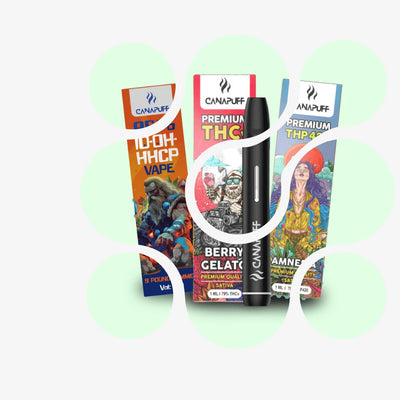

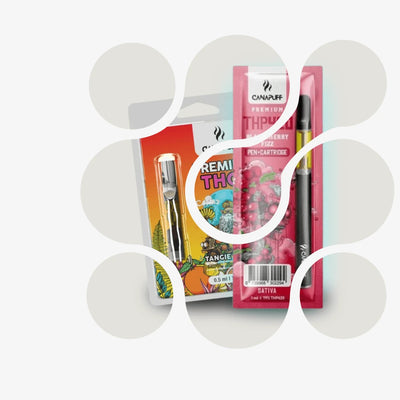
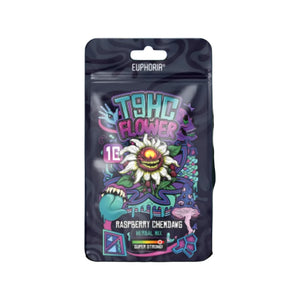
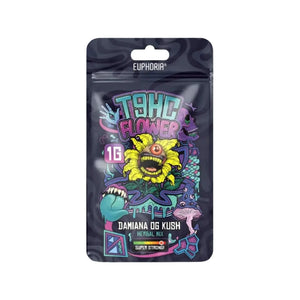
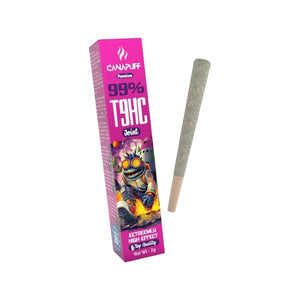
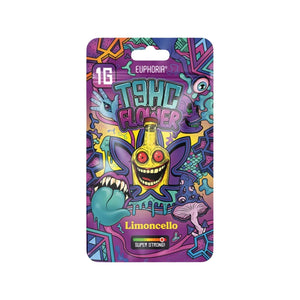



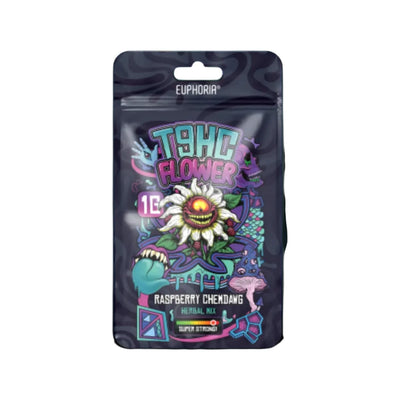
For some time now, another abbreviation has been appearing on vapes and in shop listings. THCH stands for tetrahydrocannabihexol. The substance is closely related to delta-9-THC and differs in only one detail: its side chain consists of six instead of five carbon atoms. It was first detected in cannabis in 2020, in a medicinal strain. Based on everything analyses show, what is sold under this name in vapes or on flowers comes from the lab. There are no human studies so far. In Germany, the wording of the annex of the New Psychoactive Substances Act covers substances with exactly this basic structure.
What is THCH?
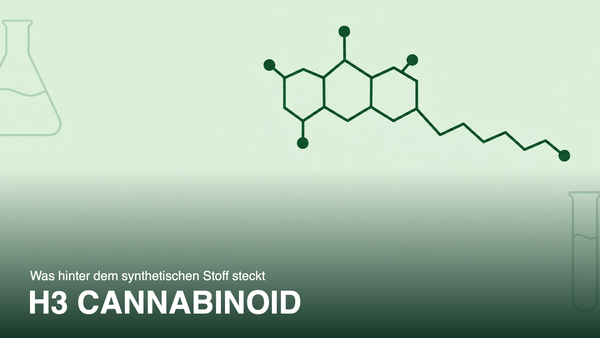
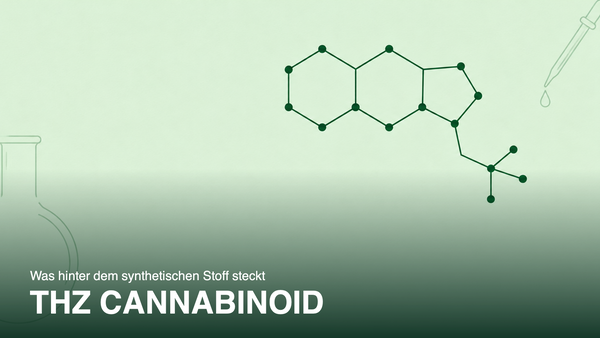
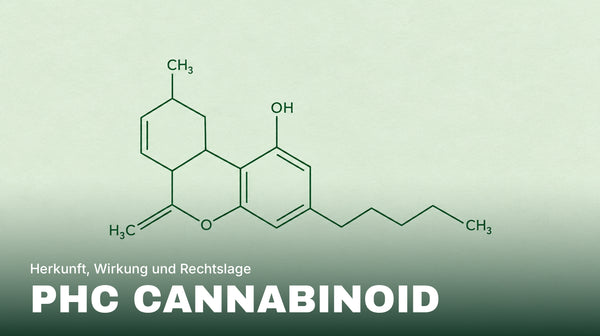
Many cannabinoids, including THC and CBD, share a similar basic structure. At one point there is a chain of carbon atoms attached, the side chain. In THC there are five carbon atoms, a so-called pentyl chain. If this chain is lengthened or shortened, related substances with their own names are created. Chemists call them homologues.
Tetrahydrocannabihexol is the homologue with six carbon atoms, that is, a hexyl chain. That is where the "H" in the name comes from. The same idea applies to THCP with seven and THCV with three carbon atoms. How these relatives differ is explained in our guide THC, THCP, THCPO and THCV.
Delta-9-THCH was discovered by an Italian research group led by Linciano (2020). They found the substance together with its CBD counterpart CBDH in the medicinal cannabis strain FM2. This finding has little to do with commercial products. A government institute in Japan (NIHS) found delta-8- and delta-9-THCH in oil products bought online. By-products in the samples point to production in the lab (Tanaka and Kikura-Hanajiri, 2024).
THC-H, THC H, delta-9-THCH: one substance, several spellings
In shops and in searches, many spellings appear: THCH, THC-H, THC H or delta-9-THCH. As a rule they all mean the same thing, namely tetrahydrocannabihexol. There is also delta-8-THCH, which differs only in the position of a double bond. This variant has also been found in products bought online.
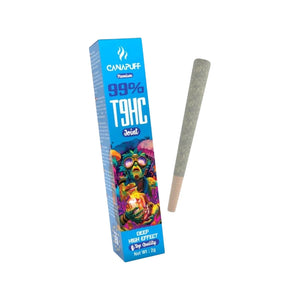
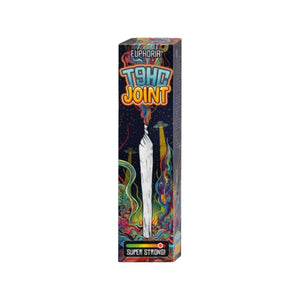
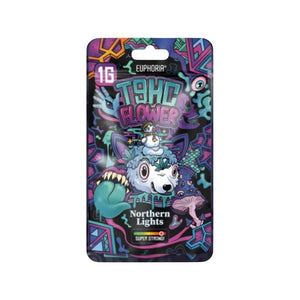
The hexyl homologue is easily confused with trade names such as T9HC or 9H-THC. These are different designations with their own history, and a similar sequence of letters says nothing about the chemistry. We have summarised what is behind T9HC in our guide What is T9HC?. Our advice: pay attention to the information on the ingredient and its content, the abbreviation alone says little.
What research knows so far
Very little, and almost all of it comes from the lab. Janssens and colleagues (2024) tested 30 THC variants for how strongly they activate the cannabinoid receptor CB1 in a cell assay. The hexyl homologue was one of the substances that stood out. The authors see the test as an indication of abuse potential and recommend monitoring such semi-synthetic cannabinoids closely.
James and colleagues (2026) examined how human liver enzymes break down the substance. Hydroxylated and carboxylated breakdown products are formed, similar to those of THC. This matters for labs, because they can now look for them specifically. For you, it means the substance is not invisible in the body.
There are no studies on tolerability in humans or on long-term consequences. Everything you read online about effects, duration or strength is based on anecdotal reports. That is why you won't find any information on this here.
THCH vape: what is known about such products
Tetrahydrocannabihexol has been sold in vapes and liquids, among other forms. This is exactly where analyses reveal a problem. Watanabe and colleagues (2025) examined two liquids in Japan. In one they found THCH acetate, a substance not previously described in products. The cannabinoids listed on the labels of the two liquids, on the other hand, they did not find at all.
This shows how little a label guarantees with new cannabinoids. On top of that, vaporising cannabinoid liquids can create new substances whose consequences have hardly been studied. If you have questions about use and risks, you can find independent counselling via the DHS addiction help directory.
Legal situation in Germany
The law does not name the substance. However, the New Psychoactive Substances Act (Neue-psychoaktive-Stoffe-Gesetz, NpSG) works with substance groups. Group 2.3 in Annex 1 covers compounds derived from 6H-benzo(c)chromen-1-ol. This is the basic structure of THC. Carbon chains of up to twelve atoms are provided for as the side chain. Tetrahydrocannabihexol has this basic structure and a chain of six atoms.
According to our understanding of the wording, the substance therefore falls under group 2.3. The group has existed since 27 June 2024, and its current version has applied since 2 December 2025 (BGBl. 2025 I Nr. 292). For covered substances, § 3 NpSG prohibits, among other things, trading, manufacturing, acquiring and possessing. A binding classification in an individual case is made by authorities and courts, not by us. For an overview of other cannabinoids, see the guide cannabinoids and the legal situation in Germany.
In the shinyfriends range
We do not carry any products with tetrahydrocannabihexol. This article is purely informational. If you want to understand why new abbreviations such as THCH, THCP or HHC keep coming onto the market, our guide on synthetic cannabinoids is worth a read. It covers what semi-synthetic means and why that matters for classifying a product. If you have questions about our range, our customer service will help you, and you can find the contact details in the footer.
How this article was created
This guide was written by our editorial team and fully revised in October 2026. All information comes from the sources linked below, and we checked the legal situation in the legal text (as of October 2026). We sell cannabinoid products ourselves, but no THCH. This article does not replace medical or legal advice.
Sources
- Linciano P, Citti C, Russo F, et al. Identification of a new cannabidiol n-hexyl homolog in a medicinal cannabis variety with an antinociceptive activity in mice: cannabidihexol. Scientific Reports. 2020;10:22019. PMC7744557
- Tanaka R, Kikura-Hanajiri R. Identification of Δ8-THC and Δ9-THC analogs with different lengths of alkyl chain at C-3 position in oil products distributed on the Internet. Yakugaku Zasshi. 2024;144(8):823-837. PubMed 39085059
- Janssens LK, Van Uytfanghe K, Williams JB, et al. Investigation of the intrinsic cannabinoid activity of hemp-derived and semisynthetic cannabinoids with β-arrestin2 recruitment assays. Archives of Toxicology. 2024;98(8):2619-2630. PubMed 38735004
- James KM, Poklis JL, Karschner EL, et al. Delta-9-tetrahydrocannabutol, delta-9-tetrahydrocannabihexol, and delta-9-tetrahydrocannabiphorol: the impact of varying alkyl chain length on delta-9-tetrahydrocannabinol analog metabolism. Journal of Analytical Toxicology. 2026;50(8):bkag045. PubMed 42286420
- Watanabe S, Murakami T, Muratsu S, et al. Discrepancies between the stated contents and analytical findings for electronic cigarette liquid products: Identification of the new cannabinoid, Δ9-tetrahydrocannabihexol acetate. Drug Testing and Analysis. 2025;17(5):694-700. PubMed 39039910
- Neue-psychoaktive-Stoffe-Gesetz (NpSG), Annex 1 No. 2.3 and § 3, version of the Sixth Ordinance of 26 November 2025 (BGBl. 2025 I Nr. 292). gesetze-im-internet.de