







Table of contents
- H3 cannabinoid effects: what's known and what isn't
- Is H3 legal in Germany and Austria?
- H3 vs HHC: where the difference lies
- H3 Superior Blend: what this term means
- Synthetic cannabinoid H3: origin and production
- H3 flowers and H3 vapes: what's available on the market
- Risks and detectability with new cannabinoids
- Sources
 CBD gummy bears - passion fruit 10 pieces 300mg
ab €2,27Ansehen
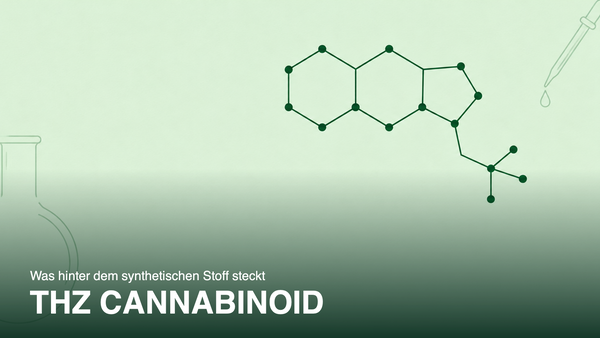
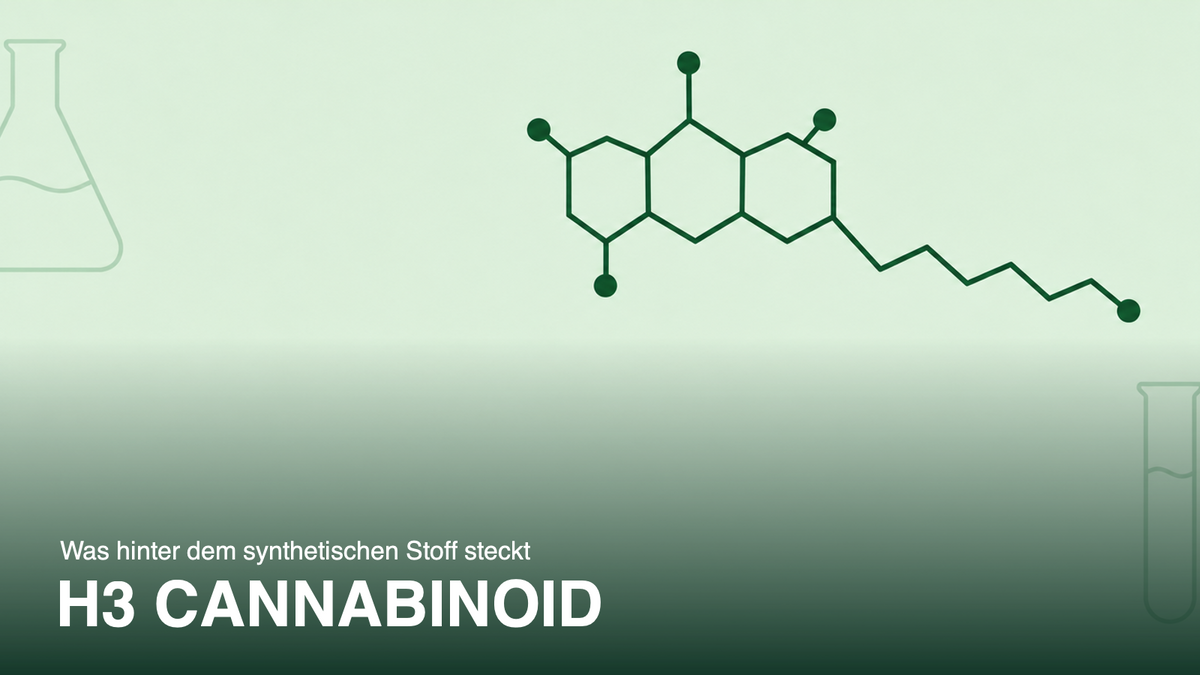
H3 is a synthetically produced cannabinoid that appears as a trade name on the European cannabinoid market, and so far almost no scientific literature has been published about it. The name says nothing about the chemical structure. It's a product label, not an abbreviation from chemical nomenclature like THC or CBD. Anyone buying H3 is first buying a brand name and only secondarily a defined substance.
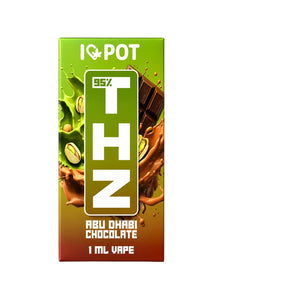
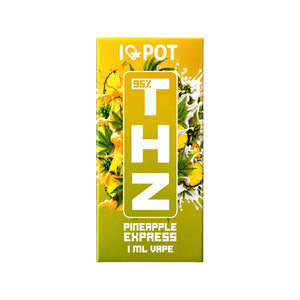
That puts H3 in the same category as HHZ, H2 and THZ. What all these names have in common is that manufacturers rarely disclose the exact molecular structure, and that independent research on them is practically nonexistent.
H3 cannabinoid effects: what's known and what isn't
No controlled studies on the effects, breakdown or side effects of H3 are publicly available. This sets it sharply apart from THC and CBD, for which literature databases like PubMed list thousands of publications.
What you can read about H3 in the trade comes from marketing texts and individual user reports in forums. Such reports don't prove a dose-response relationship. Nor do they say anything about whether a product contains the same substance across different manufacturers.
With new psychoactive substances, binding to cannabinoid receptors depends heavily on small structural differences. Even a minor change to the molecule can significantly shift how it behaves in the body. The European drugs agency collects information on new psychoactive substances through an early warning system, which you can read about on the EUDA website. We're not aware of any specific risk assessment of H3 there.
Is H3 legal in Germany and Austria?
Whether a specific H3 product is legal depends on what substance it actually contains, and that can't be judged from the outside. Germany regulates cannabis and THC through its own, repeatedly amended laws. For newly emerging synthetic substances, the New Psychoactive Substances Act may also apply, which covers substances through described chemical groups rather than individual molecules alone.
This group-based approach is the key point. The NpSG works with schedules describing substance groups. If a molecule falls under one of these descriptions, it's covered, even if its trade name appears nowhere in the law. A product name like H3 therefore says nothing about which side of the line the contents fall on.
German law defines hemp through a THC threshold and certified seed. Synthetically produced cannabinoids don't fall under this definition, even when sprayed onto hemp flowers. A sprayed flower remains chemically a lab product.
Austria and Switzerland each have their own national regulations. If you want to know what currently applies, check the current version of the relevant law, not a shop text. You can find an overview of individual substances on our page Cannabinoids at a glance.
H3 vs HHC: where the difference lies
HHC is a chemically defined molecule with a known molecular formula, while H3 is a market name without a publicly documented structure. That's the central difference, and it matters more than any potency figure.
HHC, or hexahydrocannabinol, is produced by hydrogenating delta-9-THC or from CBD through several steps. The reaction is described in the scientific literature, and labs can verify the result against reference standards.
With H3, this part is missing. As long as the manufacturer doesn't name the structure, there's no reference standard an independent lab could measure a sample against. An analysis then shows a peak, but its identification remains open. For buyers, this means: a figure like 98 percent describes the purity of a substance whose identity can't be verified.
The second difference concerns market history. New cannabinoid abbreviations tend to appear without any dedicated regulation and spread quickly before lawmakers react. This pattern has repeated itself with several successor substances.




H3 Superior Blend: what this term means
Superior Blend is a product label for a mixture of several cannabinoids, not a protected or defined term. Which substances are included in what ratio is decided solely by the manufacturer.
In practice, such blends usually consist of one main cannabinoid plus smaller amounts of other substances and terpenes. The terpenes determine smell and taste, not the psychoactive component. A blend with Lemon Haze terpenes smells citrusy because it contains limonene and terpinolene, not because of a specific genetic strain.
The difficulty lies in the word Superior. It suggests a quality level that no one actually verifies. A mixture of three cannabinoids isn't automatically better than a single substance, it's just harder to evaluate. More on this in our article about Superior Blends.
Synthetic cannabinoid H3: origin and production
H3 is produced in a lab, usually starting from CBD derived from hemp, which is converted into a different molecule through chemical intermediate steps. The starting material is plant-based, the end product isn't.
This route has been standard for semi-synthetic cannabinoids for years. CBD can be cheaply extracted from fiber hemp and serves as a chemical backbone. Through cyclization, hydrogenation or the addition of side chains, molecules are created that occur in the plant not at all or only in trace amounts. The result depends on the catalyst, temperature and reaction time.
Two things follow from this. Every batch contains by-products in varying amounts. And the same trade name can stand for different molecules at two different manufacturers, because no one has defined the term. The basics are covered in the article on synthetic cannabinoids, with a comparable case in the article on hexahydrocannabizinol.
Worth checking when you have a product in front of you:
- Does the manufacturer name a chemical designation or just the abbreviation?
- Is there an analysis certificate with a batch number, and which lab produced it?
- Are carrier substances and terpenes listed individually?
- Does the packaging state that this is a synthetically produced cannabinoid?
H3 flowers and H3 vapes: what's available on the market
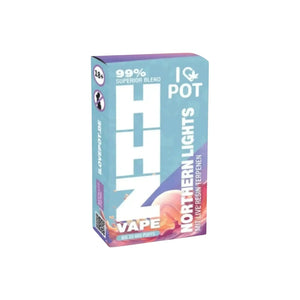
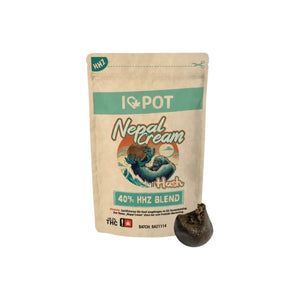
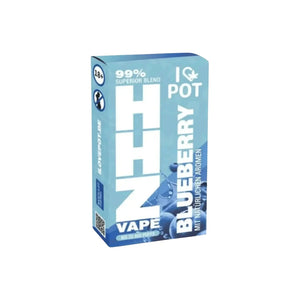
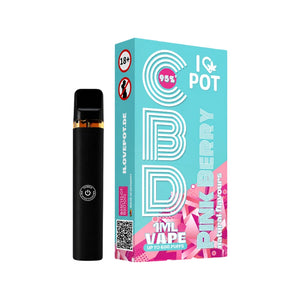
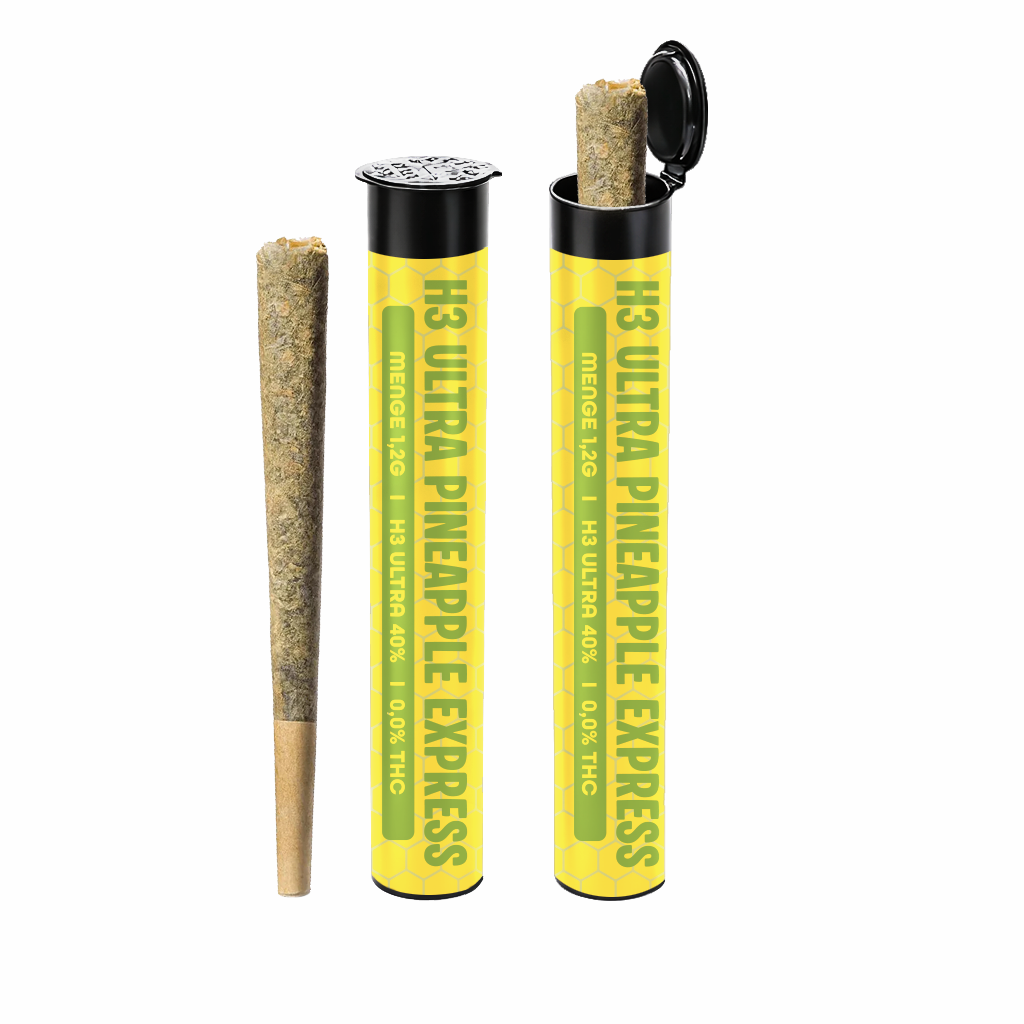
In the German market, H3 products mainly appear as 1 ml disposable vapes and as pre-rolled joints, while loose flowers are considerably rarer. The brand Happy Hemp carries several vape varieties at Shinyfriends with a 1 milliliter fill volume, including Blueberry Blast, Lemon Haze and Himbaro Breeze listed at 98 percent. There are also pre-rolls such as White Widow, Blue Lobster and Pineapple Express at 1.2 grams.
The difference between the two forms is technical. A vape heats a liquid made of cannabinoid, terpenes and often a carrier substance via a coil. A pre-roll is a hemp flower onto which an extract has been applied, and it's burned. Combustion additionally produces pyrolysis products.
The percentage figure on a vape refers to the cannabinoid share in the liquid, not to a potency per puff. How much of it is actually vaporized depends on power, resistance and puff duration, and isn't standardized for disposable devices.
The ranges are grouped under H3, H3 vapes and H3 Ultra PreRolls. Flower material in grams and liquid in milliliters are two measurements that can't be converted into one another.

Risks and detectability with new cannabinoids
Standard drug tests are calibrated for THC metabolites and only detect new synthetic cannabinoids by chance. No safety can be inferred from that.
Urine immunoassays react to THC-COOH. Whether an H3 metabolite cross-reacts with this antibody is unknown, because the breakdown products haven't been described. In road traffic, targeted mass spectrometry analyses are used, with labs continuously expanding their substance libraries. The threshold set out in § 24a of the Road Traffic Act explicitly refers to tetrahydrocannabinol and not to other cannabinoids.
For H3 itself, there are no reports of incidents. This proves neither safety nor danger, it mainly shows that the substance has barely been observed so far.
If you have questions about usage patterns or dependency, you'll find neutral information from the Federal Centre for Health Education and at cannabispraevention.de. For questions about a specific item in our range, you can reach our customer service team via the contact link in the footer.
Sources
- New Psychoactive Substances Act (NpSG), gesetze-im-internet.de/npsg
- Road Traffic Act (StVG), gesetze-im-internet.de/stvg
- European Union Drugs Agency (EUDA), information on new psychoactive substances, euda.europa.eu
How this article came about: research and text are by the editorial team at shinyfriends.de, based on the laws, authority websites and product information from the items listed in the shop mentioned above. Last revised: 15 October 2026. This article doesn't replace legal or medical advice.