



If you search for H4CBD experiences, you end up almost exclusively with forum posts and shop texts. There is hardly any reliable data. To date, no controlled study in humans has examined what H4CBD does in the body or how well it is tolerated. User reports contradict each other, and researchers at the University of Bern also write that it is unclear whether H4CBD alters consciousness. We no longer carry H4CBD and summarise here what can be backed up with sources.
What is H4CBD?
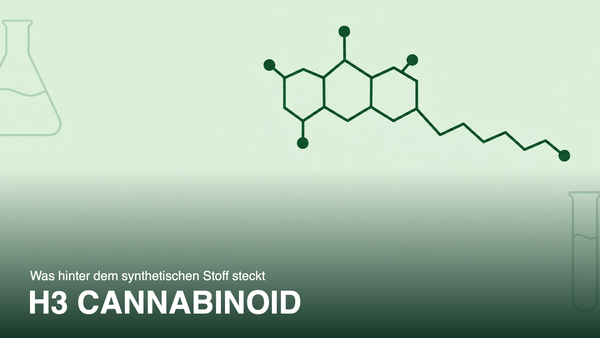
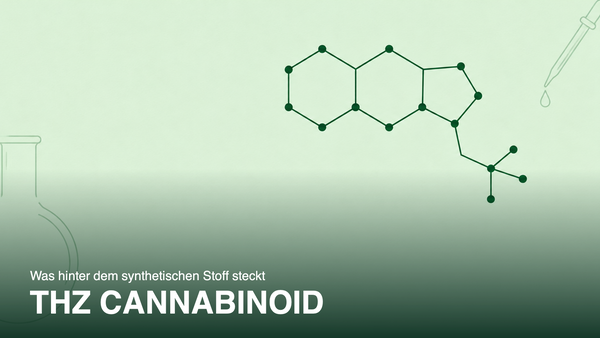
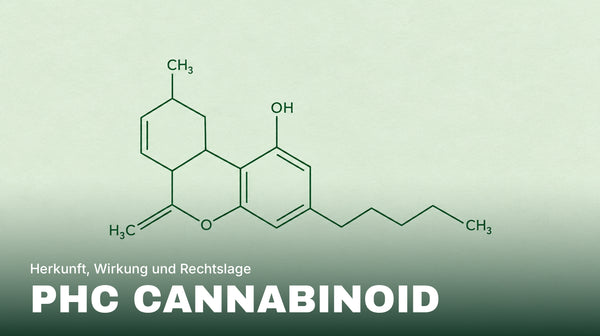
H4CBD is the abbreviation for tetrahydrocannabidiol. The number 4 stands for four additional hydrogen atoms that are added to the CBD molecule in the lab. This step is called hydrogenation. The starting material is CBD from hemp, and a similar process is also used for HHC. It therefore counts as a semi-synthetic cannabinoid. What this term means is explained in our guide synthetic cannabinoids.
The substance is not new. It was already described in 1940. However, it has only appeared on the market in the last few years, mostly on flowers, in vapes and in fruit gums. How hydrogenated CBD differs chemically from normal CBD is explained in the comparison H4CBD vs CBD.
H4CBD experiences: what reports do and don't tell you
Read through forums and you will find everything. Some describe a clear difference from CBD, others notice nothing at all. Schirmer and colleagues (2025) state this explicitly: user reports diverge.
One important reason lies in the product itself. Forensic scientists from Mainz analysed 80 seized products containing semi-synthetic cannabinoids from Germany (Hundertmark et al., 2025). Tetrahydrocannabidiol was the most frequently found derivative. At the same time, most samples contained delta-9-THC, around a quarter even more than 0.3 percent. HHC levels varied extremely.
Our assessment: a report on an untested product describes that one product. It says little about the substance itself, because nobody knows what was in the sample.
H4 vape experiences: what is behind the name
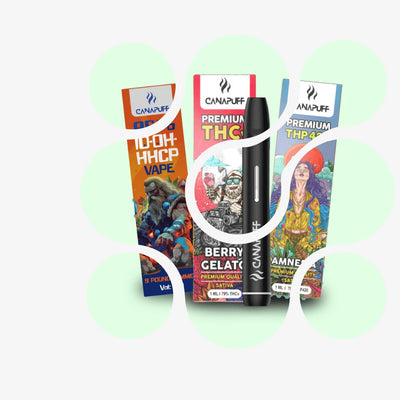
A large share of searches on this topic concerns vapes with "H4" in the name, often from the brand High Puffs. We have never carried these products and cannot say anything about their contents. "H4" on the packaging is initially just a name. Only a lab analysis can show whether it contains the pure substance or a mixture.
It is documented that labels and contents can differ. Watanabe and colleagues (2025) examined two liquids that supposedly contained certain cannabinoids. They found the stated substances in neither of them. In one product they instead probably came across isomers of tetrahydrocannabidiol, that is, closely related compounds.
Then there is vaporisation itself. Robertson and colleagues (2024) heated tetrahydrocannabidiol, among other substances, in a commercially available vaporiser. Carbonyl compounds and hydroxyquinones formed in the aerosol. The authors see this as a possible risk for people who vape such products.
What research knows about H4CBD
Not much. The oldest relevant paper is by Ben-Shabat and colleagues (2006). They produced hydrogenated CBD and examined in the lab how it binds to the cannabinoid receptor CB1. To their surprise, they found good binding. The tests were done in the lab, not in humans.
Schirmer and colleagues (2025), by contrast, describe the binding to CB1 as weak. Their actual study had a different aim: they searched urine for breakdown products after H4CBD intake and identified several of them. For labs, this means the substance becomes specifically detectable if they look for these compounds.
On the question of what the substance does in humans, there is currently nothing more. Studies on tolerability, interactions with medication or long-term consequences are lacking.
Risks and open questions
If a substance has hardly been researched, its risk also remains unknown. This is the case with H4CBD. The following points can be derived from the sources:
- Label and contents can differ, as the Watanabe study shows. The Mainz analysis also found delta-9-THC in most samples. This can play a role in road traffic and in drug tests.
- Vaporising creates new substances whose consequences have not been studied.
- Whether the substance is compatible with medication: we found no study on this.
If you take medication, are pregnant or breastfeeding, talk to your doctor or pharmacy before any contact with new cannabinoids. For questions about use and addiction, you can find counselling services near you in the DHS addiction help directory.
H4CBD and the legal situation: what can be backed up
According to Schirmer and colleagues (2025), only a few countries have so far placed H4CBD under their narcotics law, including France and Switzerland. For Germany, we found no official source that explicitly classifies H4CBD (as of October 2026). That is why we make no statement on this.
What is clear: for semi-synthetic cannabinoids, the situation has changed several times in a short period. HHC was added to the annex of the New Psychoactive Substances Act (Neue-psychoaktive-Stoffe-Gesetz, NpSG) on 27 June 2024 and has been listed in Annex II of the German Narcotics Act (Betäubungsmittelgesetz) since 23 May 2026. Substance group 2.3 of the NpSG annex was redefined as of 2 December 2025. Our guide cannabinoids and the legal situation in Germany gives an overview of the current situation.
H4CBD at shinyfriends
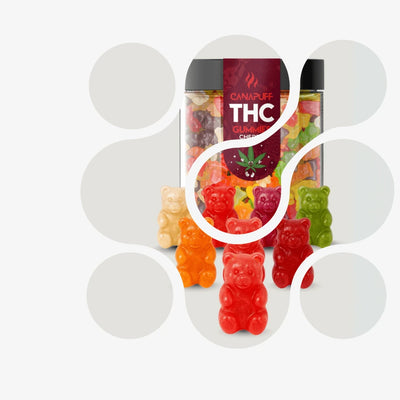
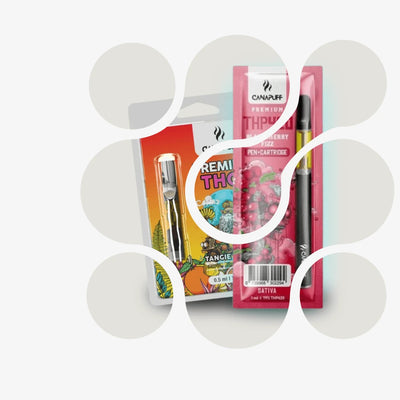
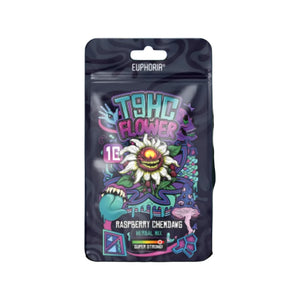
We used to have H4CBD flowers, vapes and fruit gums in our range. Today we no longer carry any H4CBD products. This article is therefore purely informational and not a purchase recommendation. If you are interested in CBD, you can find our selection in the CBD category. There too: we describe strain, format and content, not effects. If you have an H4CBD product you bought from us in the past and have questions about it, our customer service will help you. You can find the contact details in the footer.
How this article was created
This guide was written by our editorial team and fully revised in October 2026. All information comes from the sources linked below. We used to sell H4CBD ourselves, but no longer do. This article does not replace medical or legal advice.
Sources
- Schirmer W, Mösch I, Schürch S, Weinmann W. Identification of Tetrahydrocannabidiol Metabolites in Human Urine. Drug Testing and Analysis. 2025;17(12):2333-2346. PMC12689245
- Hundertmark M, Besch L, Röhrich J, Germerott T, Wunder C. Characterising a New Cannabis Trend: Extensive Analysis of Semi-Synthetic Cannabinoid-Containing Seizures From Germany. Drug Testing and Analysis. 2025;17(9):1803-1816. PMC12401644
- Watanabe S, Murakami T, Muratsu S, et al. Discrepancies between the stated contents and analytical findings for electronic cigarette liquid products: Identification of the new cannabinoid, Δ9-tetrahydrocannabihexol acetate. Drug Testing and Analysis. 2025;17(5):694-700. PubMed 39039910
- Robertson NE, Connolly J, Shevchenko N, et al. Chemical Composition of Aerosols from the E-Cigarette Vaping of Natural and Synthetic Cannabinoids. Chemical Research in Toxicology. 2024;37(12):1965-1975. PubMed 39535063
- Ben-Shabat S, Hanus LO, Katzavian G, Gallily R. New cannabidiol derivatives: synthesis, binding to cannabinoid receptor, and evaluation of their antiinflammatory activity. Journal of Medicinal Chemistry. 2006;49(3):1113-1117. PubMed 16451075
- Betäubungsmittelgesetz (BtMG), Annex II, entry hexahydrocannabinol (HHC), inserted by the 27th BtMÄndV of 19 May 2026 (BGBl. 2026 I Nr. 150), in force since 23 May 2026. gesetze-im-internet.de
- Neue-psychoaktive-Stoffe-Gesetz (NpSG), Annex 1 No. 2.3, version of the Sixth Ordinance of 26 November 2025 (BGBl. 2025 I Nr. 292), in force since 2 December 2025. gesetze-im-internet.de