
















Table of contents
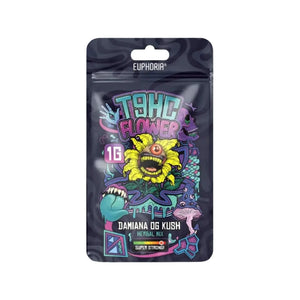
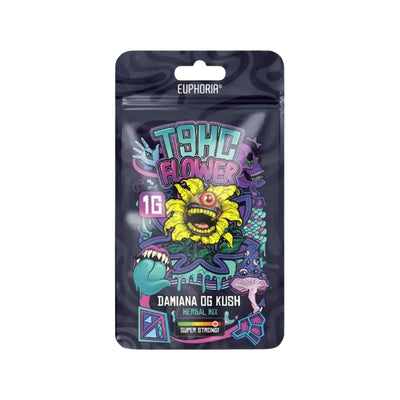 T9HC Herbal Mix – Damiana OG Kush (1 g)
ab €9,97Ansehen
Whether fenugreek has an effect on the psyche cannot be said based on current knowledge. There are only two small studies on this using special extracts, and the US research institute NCCIH considers the data on such questions too thin to draw conclusions. Something else is better documented: fenugreek can irritate the stomach and intestines, trigger allergies and lower blood sugar. During pregnancy, amounts beyond normal seasoning are considered not safe. Here is what the studies show on the most common questions.
Plant, seeds and traditional use
Fenugreek (Trigonella foenum-graecum) is an annual plant from the legume family. Mainly the small, yellowish-brown seeds are used. You may know them from curry blends. Their smell is reminiscent of maple syrup, which is due to the aroma compound sotolon. In the kitchen, the seeds are roasted, ground or sprouted.
The European Medicines Agency (EMA) has assessed fenugreek seeds. It only recognises a traditional use for temporary loss of appetite and, externally, for mild skin inflammation. The EMA stresses that this classification is based on long experience and not on clinical studies.
Does fenugreek have an effect on the psyche?
This is the question that brings most people to this page. The honest answer: the data is not sufficient. There are two studies that at least also measured psychological values.
Khanna and colleagues (2020) gave 48 menopausal women an extract or a placebo for six weeks. In questionnaires, the extract group also scored better on the question of depressed mood. Several authors of the study work for the manufacturer of the extract. Hausenblas and colleagues (2020) studied 57 young men without pre-existing conditions and used questionnaires to record anxiety, among other things. Here too it was a special extract, tested over 60 days. The authors report better anxiety scores in the extract groups than with placebo.
Our assessment: two small, short studies with branded extracts say nothing about what commercially available fenugreek tea, powder or capsules do. The NCCIH, the US institute for complementary medicine, comes to the same conclusion. For most questions beyond blood sugar, it says, the evidence is too limited to draw conclusions.
If you are not doing well mentally, a plant is no substitute for help. Your GP practice is a good first step. In Germany you can reach the TelefonSeelsorge around the clock and free of charge on 0800 111 0 111 or 0800 111 0 222.
Fenugreek for women: menopause, cycle and hormones
Fenugreek is often promoted as a "women's plant" that balances hormones. The evidence for this is thin. The study by Khanna (2020) mentioned above found fewer hot flushes and changed hormone levels in menopausal women. It is small and short, and several authors work for the manufacturer of the extract.
According to the NCCIH, there are only a few low-quality studies on period pain. Whether fenugreek changes anything here is unclear. For searches such as breast growth or wanting to have a baby, we have not found a single reliable study. If you have complaints related to your cycle or the menopause, your gynaecologist is the right place to go.
Fenugreek while breastfeeding
Fenugreek has long been used during breastfeeding to stimulate milk production, often as a tea or in capsules. The research is mixed. A network meta-analysis by Khan and colleagues (2018) found a small increase in milk volume in five studies with a total of 122 participants. The Cochrane review by Foong and colleagues (2020), on the other hand, rates the evidence for herbal remedies as very uncertain. The studies were too different to be summarised cleanly.
The US database LactMed notes that the effect in humans may be mainly psychological. In a survey, 43 percent of mothers who had taken fenugreek believed they had more milk. Five percent had the impression that it had decreased.
What matters is the advice LactMed explicitly gives: no remedy replaces advice on latching, feeding frequency and the wellbeing of mother and child. If you feel you have too little milk, talk to your midwife or a lactation consultant first.
Fenugreek side effects in babies
Many mothers ask about side effects in babies. The data on this is sparse. For herbal remedies, including fenugreek, the Cochrane review mentions hives in infants and urine smelling of maple syrup in mothers. LactMed also describes that the maple smell can pass into urine, sweat and possibly breast milk. According to LactMed, there are hardly any reliable studies on safety for breastfed infants.
If you notice anything in your baby after breastfeeding, such as a rash, diarrhoea or restlessness, have a paediatrician take a look and mention that you are taking fenugreek.
Fenugreek during pregnancy
Here the sources are clearer than for any other question. During pregnancy, the NCCIH classifies all amounts beyond what ends up in food through cooking as not safe. Larger amounts have been linked in animals and humans to an increased risk of birth defects.
As a spice in food, fenugreek is therefore not an issue. During pregnancy, however, you should only use capsules, teas or powder in larger amounts after consulting your gynaecologist or midwife.
Fenugreek side effects in adults
According to the NCCIH, fenugreek is considered safe in the amounts usual in food. In larger amounts, for example in capsules, LactMed and the NCCIH describe the following problems:
- Stomach and intestines: diarrhoea, bloating, nausea and vomiting are the most common complaints.
- Blood sugar: larger amounts can lower blood sugar. This is relevant for people with diabetes, especially in combination with medication.
- Blood clotting: fenugreek can interact with the blood thinner warfarin and promote bleeding.
- Liver: there are case reports of liver damage, including with combination products containing fenugreek.
- Smell: sweat and urine can smell of maple syrup.
With capsules there is another point. In the USA, dietary supplements do not need approval before sale, and according to LactMed the information on the label can differ from the contents. If you take medication regularly, ask your pharmacy before taking capsules containing fenugreek.
Fenugreek allergy: symptoms and cross-reactions
Fenugreek belongs to the legume family. If you are allergic to peanuts, chickpeas or other legumes, you may also react to fenugreek. LactMed explicitly mentions this cross-reaction, and Che and colleagues (2017) describe corresponding case reports on peanut and fenugreek.
Allergic reactions up to severe cases have been reported, as well as worsening of asthma. Typical signs of an allergic reaction are itching, rash, swelling of the face or tongue and shortness of breath. If you have shortness of breath or swelling in the mouth, call the emergency number 112 immediately.

How this article was created
This guide was written by our editorial team and fully revised in October 2026, because the previous version contained promises that cannot be backed up by studies. All information comes from the sources linked below. We do not sell fenugreek products. This article does not replace medical advice, a midwife or lactation counselling.
Sources
- National Center for Complementary and Integrative Health (NCCIH): Fenugreek. Usefulness and Safety. As of February 2025. nccih.nih.gov
- Drugs and Lactation Database (LactMed): Fenugreek. National Institute of Child Health and Human Development, revision 15 July 2026. PubMed 30000838
- European Medicines Agency (EMA): European Union herbal monograph on Trigonella foenum-graecum L., semen, Revision 1 (EMA/HMPC/179591/2018), published 2022. ema.europa.eu
- Foong SC, Tan ML, Foong WC, et al. Oral galactagogues (natural therapies or drugs) for increasing breast milk production in mothers of non-hospitalised term infants. Cochrane Database of Systematic Reviews. 2020;5:CD011505. PMC7388198
- Khan TM, Wu DB, Dolzhenko AV. Effectiveness of fenugreek as a galactagogue: A network meta-analysis. Phytotherapy Research. 2018;32(3):402-412. PubMed 29193352
- Khanna A, John F, Das S, et al. Efficacy of a novel extract of fenugreek seeds in alleviating vasomotor symptoms and depression in perimenopausal women: A randomized, double-blinded, placebo-controlled study. Journal of Food Biochemistry. 2020;44(12):e13507. PubMed 33025616
- Hausenblas HA, Conway KL, Coyle KRM, et al. Efficacy of fenugreek seed extract on men's psychological and physical health: a randomized placebo-controlled double-blind clinical trial. Journal of Complementary and Integrative Medicine. 2021;18(2):445-448 (online 2020). PubMed 32441668
- Che CT, Douglas L, Liem J. Case reports of peanut-fenugreek and cashew-sumac cross-reactivity. Journal of Allergy and Clinical Immunology: In Practice. 2017;5(2):510-511. PubMed 28283164
- TelefonSeelsorge Deutschland. telefonseelsorge.de