






























Thc reduction calculator
How long is THC detectable in your system?
Answer 4 quick questions and get your specific clean date, ready to save as an appointment in your calendar.


How long THC stays detectable depends on several factors: how often you use it, how you use it, your body weight and your metabolism. A single joint clears the bloodstream within a few hours, but it is still detectable in urine for days. Anyone who uses cannabis regularly has to reckon with considerably longer detection windows, and with daily use that can mean up to eight weeks in a urine test.
Since the German cannabis act (CanG) came into force on 1 April 2024, use has been legal for adults in Germany. Detectability still matters, though, for example at roadside checks, in an MPU (medical-psychological assessment) or during workplace drug tests. Our calculator gives you your specific clean date in four steps.
THC drug test: blood, urine, saliva and hair
Four methods are used most often in practice, each with a different detection window and a different area of application.
How long is THC detectable in blood?
Detects active THC and the intermediate metabolite 11-OH-THC. Relevant at roadside checks. Detectable from a few hours to several days depending on how often you use.
How long is THC detectable in urine?
Detects the metabolite THC-COOH. The longest detection window of the standard methods, up to eight weeks with very frequent use. The standard choice for routine workplace checks and the MPU.
How long is THC detectable in saliva?
The police standard at roadside checks. Detects active THC via the oral mucosa. Detectable from a few hours up to four days.
Hair analysis: THC evidence going back months
Covers roughly 90 days retrospectively per centimetre of hair length. Used above all for the MPU and officially ordered examinations.
Which factors affect your detection window?
THC is fat-soluble and is stored in fatty tissue. How quickly your body breaks it down depends on four main factors.
Frequency of use
After one-off use, THC disappears from the blood comparatively quickly. With regular or daily use, THC accumulates in fatty tissue, which extends the detection window considerably.
Method of use
Smoked or vaped, THC reaches the bloodstream within minutes and is broken down comparatively quickly. Edibles and oils are absorbed through the gastrointestinal tract, and the breakdown takes longer here because the metabolite THC-COOH is detectable more strongly and for longer.
Body weight and body fat percentage
THC is fat-soluble. People with a higher body fat percentage tend to show longer detection windows, because the THC migrates back from the fat stores into the blood more slowly.
Metabolism and lifestyle
Metabolic rate, fluid intake, physical activity and liver health all influence how fast THC is excreted. A calculator cannot capture these individual factors, so the values should always be read as an estimated range.

Detection windows at a glance
| Test | One-off | Regular | Daily |
|---|---|---|---|
| Blood | up to 6 hrs | 1–2 days | up to 7 days |
| Urine | 2–3 days | 1–2 weeks | 3–8 weeks |
| Saliva | up to 24 hrs | 1–2 days | up to 4 days |
| Hair | approx. 90 days per cm of hair length | ||
THC behind the wheel: legal limits in Germany

Since 22 August 2024, Germany has applied a THC limit of 3.5 nanograms per millilitre of blood. Anyone below that is considered fit to drive; anyone above it risks a fine, penalty points and loss of their licence. Zero tolerance still applies to novice drivers in their probationary period and to drivers under 21. Anyone drinking alcohol alongside cannabis also falls back under the stricter interpretation. Repeat offences can trigger an MPU, and its requirements are tougher than the blood test alone.
MPU and THC: what you need to know
A medical-psychological assessment (MPU) is ordered if you have lost your driving licence over cannabis use or have been flagged repeatedly at roadside checks. To pass the MPU, you have to prove that you are living permanently cannabis-free.
What the MPU requires
At least 6 months of documented abstinence for a single incident, and 12 months for repeat offences or previous regular use. Alongside this, 4 to 6 drug screenings are carried out at unannounced intervals, as urine tests at accredited bodies such as TÜV or DEKRA. A hair analysis over 6 cm of hair length documents freedom from use over the past six months.
Practical tip: start your abstinence documentation with an accredited body before you officially register for the MPU. That shortens your waiting time considerably once you have passed the test. The tests are unannounced, and you have to get an appointment within a few days or the attempt counts as failed.

THC tests at work: your rights and the consequences
Workplace drug tests are not generally permitted in Germany. They either have to be set out in the employment contract or justified by a specific operational safety risk. Even if you use cannabis legally at the weekend, you can still test positive on Monday: the cannabis act protects your use, not the consequences at work.
When is a workplace drug test allowed?
Safety-critical jobs such as pilot, lorry driver, machine operator, police officer or firefighter are the standard case, and drug testing is usually agreed in the employment contract here. Where there is a specific suspicion (after a workplace accident, for instance), the employer can demand a test as long as it remains proportionate.
What a positive test can mean
In safety-critical roles you face a formal warning or summary dismissal. In non-safety-critical jobs it is usually just a warning for a first incident, with employment-law consequences if it happens again.
How can you speed up THC breakdown?
THC is fat-soluble, is metabolised by the liver and is excreted via stool and urine. You cannot really speed up the natural breakdown, since your metabolism works at its own pace.
What genuinely speeds up THC breakdown
Two to three litres of water a day, regular exercise such as endurance sport, a high-fibre diet, enough sleep and, of course, no further use. Cardio training is particularly effective, because it burns the fat that THC is stored in.
Detox drinks and tricks: what does not work on a drug test
Detox drinks sold online have no scientific backing, and some are even flagged as attempted manipulation by modern tests. Sauna sessions and excessive exercise immediately before a test can even raise your readings in the short term, because THC is released from fatty tissue into the blood.
Using cannabis without a positive THC test
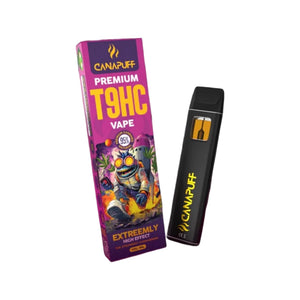
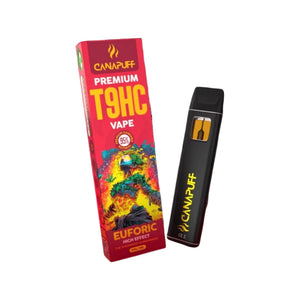
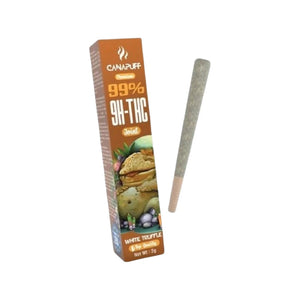
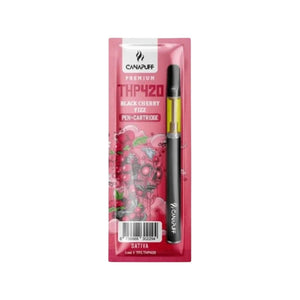
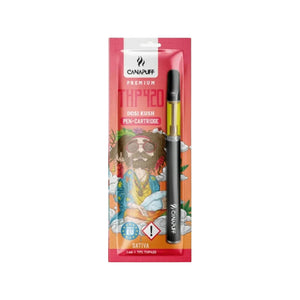
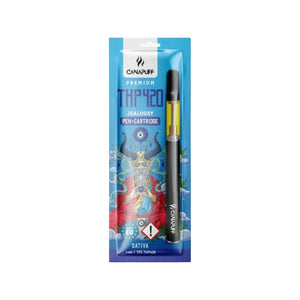
Not every cannabinoid shows up on a classic drug test. Standard drug tests are designed specifically for THC-COOH, the metabolite of Delta-9-THC. T9HC, HHZ and THP426 have different metabolic pathways and are generally not picked up by a standard test. With us you will find legal alternatives that deliver the cannabis experience without showing up as THC on a standard drug test.
Frequently asked questions about the THC drug test
How accurate is the THC breakdown calculator?
The calculator gives estimates based on published average values from research. Your individual clearance time depends on metabolism, dose, potency and many other factors, so the actual time can be longer or shorter.
How long is THC detectable in blood?
After one-off use, THC is usually no longer detectable in blood after a few hours, at most six. With daily use, THC can still circulate in the blood for seven days or more, because it keeps being released from fatty tissue.
How long does THC stay detectable in urine?
A urine test detects the metabolite THC-COOH. After one-off use that usually means two to three days. With regular use, one to two weeks. With very frequent daily use, a urine test can come back positive for up to eight weeks.
Does CBD show up on a THC test?
Pure CBD is not identified as THC on a standard drug test. In Germany, CBD products may legally contain up to 0.2 percent THC, which in rare cases is enough to make a sensitive test come back positive if consumption is very high.
Do T9HC, HHZ or THP426 show up on a THC test?
Standard drug tests are designed specifically for THC-COOH (the metabolite of Delta-9-THC). T9HC, HHZ, THP426 and similar cannabinoids have different metabolic pathways and are generally not picked up by a standard test. Specialised laboratory tests can detect these compounds, though, which matters for an MPU or official examinations.
How long is THC detectable in hair?
A hair analysis covers use going back roughly 90 days per centimetre of hair length. With longer hair, use can be traced back several months. This test is used above all for the MPU and officially ordered examinations.
What is the THC limit in Germany?
Since 22 August 2024, a THC limit of 3.5 ng/ml of blood has applied. Anyone above it counts as unfit to drive, with a fine, penalty points and loss of licence on the cards. Zero tolerance still applies to novice drivers in their probationary period and drivers under 21.
Guide values based on published research data. Not a substitute for legal or medical advice.
Sources
- German Federal Ministry for Digital and Transport: expert group on the THC limit in road traffic
- Deutsche Gesellschaft für Verkehrsmedizin (German Society for Traffic Medicine): waiting time after cannabis use (PDF)
- ADAC: How long is THC detectable?
- TÜV SÜD: drug screening and abstinence documentation for the MPU
- Huestis MA: Human Cannabinoid Pharmacokinetics (NIH PMC)