




















































Table of contents
- Mexican Mountain Palm (Chamaedorea elegans)
- The ideal location for the Mexican Mountain Palm
- Low-maintenance with minor quirks: How to keep your Parlor Palm healthy
- Does it really bloom? The flower of the Mexican Parlor Palm
- Mexican Parlor Palm and cats: Toxic or safe?
- Conclusion: Who is the Chamaedorea elegans suitable for—and who might it not be ideal for?
 CBD gummy bears - passion fruit 10 pieces 300mg
ab €2,27Ansehen
CBD gummy bears - passion fruit 10 pieces 300mg
ab €2,27Ansehen
If you have ever tried to brighten up your home with some greenery, you know the challenge: Many plants may look attractive, but they wilt at the first sign of low light or are toxic to pets. This is where it comes in—the Mexican Mountain Palm, also known by its botanical name Chamaedorea elegans.
It is something like the easygoing roommate among houseplants: undemanding, gentle on the nose, and harmless to your four-legged friends. In this blog, you will learn where it thrives best, how to care for it, what to know about its Flower, and whether you can safely keep it around cats or dogs.
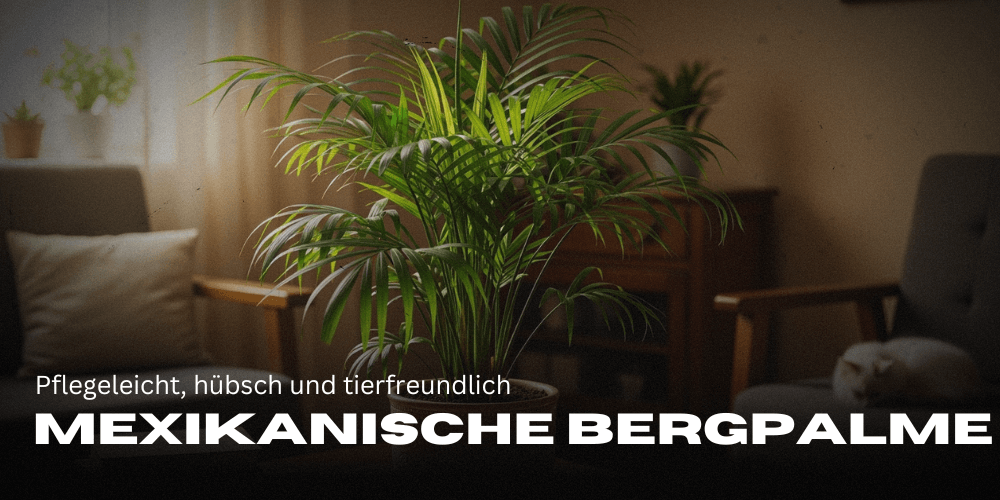
Mexican Mountain Palm (Chamaedorea elegans)
The Mexican Mountain Palm originates—as its name suggests—from the tropical mountain forests of Mexico and Guatemala. There, it grows beneath the dense canopy of taller trees, which explains its tolerance for low light. Its growth is slender, elegant, and rather understated—a true team player among houseplants.
It is a classic in many homes—not only because of its appearance, but above all due to its ease of care. It is one of the few palm species that truly thrive indoors—even if you do not have a green thumb.
The ideal location for the Mexican Mountain Palm
If this plant could speak, it would probably say, “Give me a little light, but please, no drama.” The Mexican Mountain Palm prefers bright, indirect light, but it also adapts surprisingly well to semi-shaded or shaded spots.
What it does not like:
- direct sunlight (which burns its delicate leaves)
- cold drafts
- constant changes of location
The ideal location is near a window without direct midday sun—such as a north- or east-facing window. It also thrives in a bathroom with a window, as the high humidity there resembles its tropical origins.
Low-maintenance with minor quirks: How to keep your Parlor Palm healthy
The Mexican Parlor Palm is not particularly sensitive, but a little attention is still beneficial. Here is an overview of the most important care tips:
Care instructions at a glance:
| Care aspect | Recommendation |
|---|---|
| Watering | Keep evenly moist, avoid waterlogging |
| Light requirements | Bright to semi-shaded, no direct sunlight |
| Humidity | Moderate to high, occasional misting is beneficial |
| Fertilization | Once a month during the growing season (March–September) |
| Repotting | Approximately every 2–3 years, when the pot becomes too small |

Tip: If the leaf tips turn brown, this may be due to dry air from heating. In this case, regular misting with lime-free water can help.
Does it really bloom? The flower of the Mexican Parlor Palm
Many people are unaware: The Mexican Parlor Palm can indeed bloom—even indoors! The flowers are small, yellowish, and grow on slender panicles. While not particularly spectacular, they are a pleasant surprise when they appear.
However, this requires some patience and good conditions. A mature plant that is well cared for may produce flowers in the spring months. Occasionally, a type of berry cluster may form afterward—however, these are not edible and are purely decorative.
Mexican Parlor Palm and cats: Toxic or safe?
A major advantage—especially for pet owners—is the question: Is the Mexican Parlor Palm toxic to cats or dogs?
The good news: No, it is not toxic. Chamaedorea elegans is not dangerous to cats, dogs, or other small animals. This makes it one of the few palm species you can safely keep in a household with pets.
Of course, this does not mean it is intended as a cat toy—if your cat likes to nibble on leaves, you should still place the plant somewhere protected. However, there is no need to worry about health concerns.
Conclusion: Who is the Chamaedorea elegans suitable for—and who might it not be ideal for?
The Mexican Parlor Palm is not a demanding plant, but rather a reliable companion—especially for people who:
- are looking for an easy-care, long-lived houseplant
- have little natural light in their home
- own pets and want to avoid toxic plants
- wish to bring a touch of the tropics into their living space
It is less suitable if you want a plant that grows quickly or impresses with colorful flowers. It also does not thrive in completely dark corners or in direct sunlight over the long term.
If you are considering adding some greenery to your home, the Mexican Parlor Palm could be the perfect choice.
And if you already have one at home: How is it doing? Share your experiences in the comments—we look forward to hearing from you!


